BLOG
〰️
BLOG 〰️

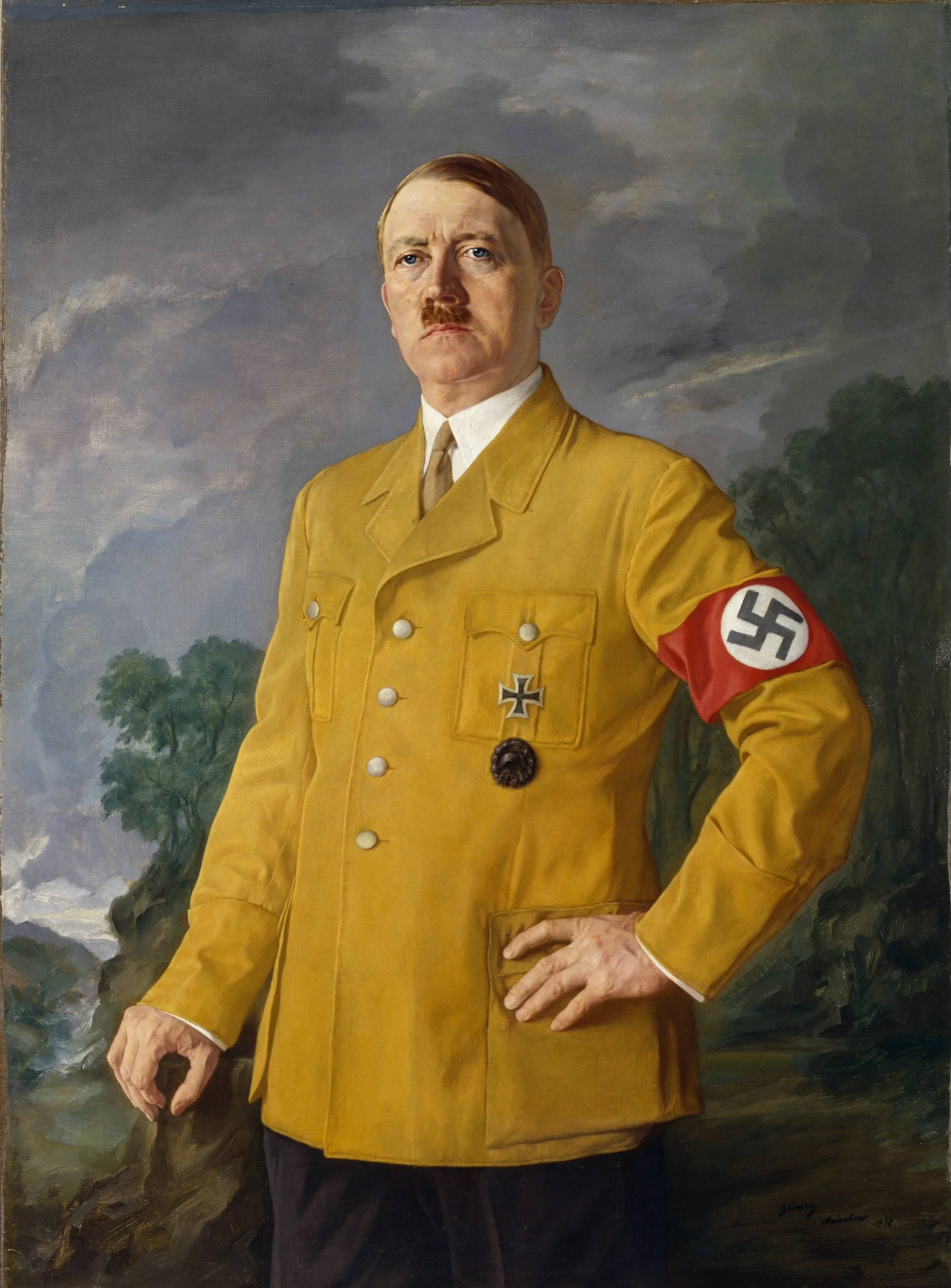
Adolf Hitler
The Girl with a Pearl Earring
The Story Behind The Art Thief
By M. Ward Leon
The prisoner had denied everything until John Marlboro mentioned the Russians.
Then his composure faltered. He glanced toward the door, lowered his voice, and gave John a name: a Swiss code name belonging to someone who was supposed to be dead.
That moment is fictional. But the world around it was real: a postwar Europe crowded with fugitives, false identities, buried fortunes, and questions that had no easy answers.
After the Second World War, networks later known as ratlines helped former Nazis and other fascist war criminals flee Europe and evade prosecution. Some made their way to South America; others found refuge in the Middle East. Their routes were not a tidy system, and they did not all follow the same path. But sympathetic contacts, forged documents, money, and luck helped many escape.
Some fugitives traveled through Spain before crossing the Atlantic. Adolf Eichmann, one of the principal organizers of the Holocaust, escaped to Argentina, as did Josef Mengele, the concentration-camp physician known as the “Angel of Death.” Klaus Barbie, the Gestapo chief called the “Butcher of Lyon,” received help from U.S. Army Counterintelligence before eventually reaching South America. Franz Stangl, commandant of the Sobibor and Treblinka extermination camps, also escaped.
Others moved through Italy. Northern Italy, Rome, and the port of Genoa formed part of a route fugitives used to reach abroad. In some cases, sympathetic clergy helped them obtain new identities, while Red Cross travel documents could help them cross borders. Among those who escaped by way of Italy were Walter Rauff, an SS officer involved in developing mobile gas vans; Erich Priebke, who took part in the Ardeatine massacre in Rome; and Ante Pavelić, leader of Croatia’s fascist Ustaša regime. Josef Schwammberger, an SS commandant who oversaw labor camps in occupied Poland, escaped as well.
Other fugitives passed through neutral European countries or continued to the Middle East. Aribert Heim, an SS doctor known for medical experiments at Mauthausen, fled to Egypt, as did Nazi ideologue Johann Jakob von Leers. Alois Brunner, an aide to Eichmann and commander of the Drancy internment camp, escaped to Egypt and later settled in Syria. Otto Skorzeny, the SS officer who helped rescue Benito Mussolini, and Hans Eisele, a doctor at Buchenwald, also found refuge beyond Europe.
These escapes inspired the premise of my novel, The Art Thief. If so many wanted men were fleeing to South America, that was where the most determined manhunts would be expected. Switzerland offered a more unusual possibility: close to Germany, partly German-speaking, and—at least in fiction—a place where money might buy cooperation. For Hitler to reach it, though, every stage of the plan would have to succeed.
The historical consensus is clear: Hitler died by suicide in the Berlin Führerbunker on April 30, 1945. Historians generally consider escape nearly impossible. Yet rumors persisted. Stalin told Western leaders in 1945 that he believed Hitler might have escaped, and the CIA later examined reports that Hitler had survived under an alias, including “Adolf Schrittelmayor.” The agency eventually dropped its inquiry. None of this proves that Hitler lived. It does show how quickly uncertainty and suspicion took hold in the chaos after the war.
In my novel, Hitler turns that uncertainty into cover. He kills a double and leaves the body in the bunker. Months earlier, the double’s dental records have been altered so that the remains appear to confirm Hitler’s death. Soviet troops arrive after the bodies have been doused with petrol and burned in a shell crater outside an emergency exit. There is little left to identify by sight, and the teeth become crucial. In the story, that narrow dependence on dental evidence offers Hitler a chance to vanish.
Getting out of Berlin would be another matter. The city’s airspace was nearly sealed, though a few flights made it through. Hanna Reitsch flew into Berlin on April 26 and later left with General von Greim. I imagined Hitler escaping on a similar night flight, heading south toward the Alps. Nazi leaders had once envisioned the region as a final stronghold, making it a fitting first stop for a fugitive with nowhere else to go.
From there, the plan would rely on money and silence. In the novel, loyal SS men prepare a remote landing field in Switzerland. Accomplices arrange a safe house, a new identity, and a believable backstory. Nazi wealth pays for the operation; a small, carefully vetted household helps maintain the illusion. But every person brought into the plan adds another chance that it will unravel.
Hitler would also need to change his appearance. Plastic surgery in the 1940s was more advanced than many people assume. Surgeons such as Harold Gillies and Archibald McIndoe performed remarkable reconstructive work on injured servicemen. But surgery would mean weeks of recovery, bandages, and a surgeon trusted with the truth. Karl Gebhardt, a senior Nazi physician infamous for his role in brutal medical experiments on concentration-camp prisoners, is one chilling figure from that period to imagine near such a plot. The connection is fictional, and the risks would be enormous.
The greatest danger would not be the flight, the surgery, or even the false identity. It would be the people who knew. The dental technicians, the guards, the pilot, the accomplices who arranged the landing field—any one of them could expose the scheme. In the novel, Hitler tries to contain the risk by eliminating witnesses and surrounding himself with a small circle of loyalists. But the more tightly he holds the secret, the more people he needs to keep it.
John Marlboro is the man who begins pulling at that thread. A Polish Jew, he emigrates to the United States before the war, one of the few members of his family able to escape. When America enters the conflict, he joins the Army. His fluency in German, Polish, English, and Russian makes him valuable to military intelligence. He serves among the interrogators known as the Ritchie Boys, using language and psychology to question captured Nazis. Sometimes he poses as a Russian officer, letting prisoners imagine what Soviet capture might mean. Some break under the threat. Others reveal themselves in what they refuse to say.
Later, John joins the Monuments Men, the Allied effort to recover art stolen by the Nazis. He questions prisoners about hidden collections and buried caches. There, he finds the clue: a Swiss code name linked to a man the world has accepted as dead.
In the novel, the clue leads to a painting.
Hitler is obsessed with Johannes Vermeer and has Girl with a Pearl Earring stolen. He keeps it in his bedroom in the Führerbunker, but cannot take it with him without inviting questions. If the painting disappears at the same time Hitler supposedly dies, someone might wonder why. He plans to have it brought to him later, after the danger has passed.
The historical record does not place Vermeer’s painting in Hitler’s bunker. That detail belongs entirely to the novel. But a painting can do what a document cannot: give a hidden life a physical trace. John follows the code name, then the money, then the people who were supposed to have vanished. The closer he gets, the more plausible the escape seems—and the more fragile it becomes.
Hitler’s plan depends on a string of unlikely successes: an altered record, a cooperative pilot, a quiet border crossing, years of silence. Yet the secret’s weakest point is not necessarily a person. It may be the thing he could not bear to leave behind.
The painting waits in Berlin, a loose end he intends to reclaim. And John is following its trail. But as the old line warns, the best-laid schemes of mice and men often go awry.